
Pharmaceutical Logistics: Moving Temperature-Sensitive Equipment and Controlled Environments Without Compromising GMP
Pharmaceutical Logistics: Moving Temperature-Sensitive Equipment and Controlled Environments Without Compromising GMP
Pharmaceutical logistics is governed by a compliance framework that extends into every dimension of how equipment is handled, packaged, transported, and documented. Good Manufacturing Practice regulations do not pause when equipment leaves the manufacturing floor. The standards that apply to the production environment apply to the transport environment as well, and a logistics operation that does not meet those standards creates regulatory exposure for the pharmaceutical company, the research institution, or the healthcare facility that authorized the move.
STSI manages pharmaceutical logistics with the same precision that the pharmaceutical industry applies to its own operations. The team understands GMP requirements, operates vehicles and packaging systems appropriate for regulated environments, and provides the chain of custody documentation that audit-ready pharmaceutical operations require.
What GMP Compliance Means for Equipment Transport
Good Manufacturing Practice regulations, as defined by the FDA and international equivalents including EU GMP, establish the standards for how pharmaceutical products and the equipment used to manufacture them must be handled throughout their lifecycle. For equipment transport, GMP compliance covers several dimensions:
The transport environment must be appropriate for the equipment's regulatory classification and operating requirements. A sterile filling line component that must be maintained in a controlled environment cannot travel in a standard commercial truck with an open cargo area.
The packaging materials used for pharmaceutical equipment must not introduce contaminants. Packaging materials that shed particles, contain reactive chemicals, or are incompatible with the equipment's cleanroom requirements are not acceptable for GMP-regulated transport.
Documentation must be maintained throughout the transport process. The chain of custody record for GMP-regulated equipment includes not just the physical handling documentation but the environmental monitoring records that confirm the transport conditions met specifications.
Any deviations from the specified transport conditions must be documented, evaluated, and resolved according to the facility's deviation management procedures before the equipment is returned to service.
Temperature Chain Integrity: The Critical Control for Cold-Sensitive Equipment
Temperature-sensitive pharmaceutical equipment includes a broader range of devices than the obvious cold-chain equipment. Ultra-low temperature freezers, pharmaceutical stability chambers, analytical instruments with temperature-sensitive components, and certain processing equipment all have temperature specifications that apply during transport.
Ultra-low temperature freezers, which hold biological samples, APIs, or pharmaceutical products at temperatures as low as -80 degrees Celsius, present the most demanding transport challenge. These freezers must maintain their contents at temperature continuously. If the freezer's power is interrupted during transport, the contents begin to warm immediately, and depending on the contents, even a brief temperature excursion can render them unusable.
STSI's approach to ultra-low temperature freezer transport begins with a detailed pre-move evaluation. The team documents the contents of the freezer, the acceptable temperature range for the contents, and the time window within which the move must be completed to maintain temperature without active refrigeration. For freezers that cannot be powered during transport, the team uses insulated transport containers with dry ice or liquid nitrogen to maintain temperature throughout the move. Continuous temperature monitoring devices log conditions from the moment the freezer is moved until it is reconnected and confirmed stable at the destination.
For equipment that can be powered during transport, STSI's climate-controlled vehicles provide the stable temperature environment required, and the temperature monitoring documentation confirms that the environment remained within specification throughout the journey.
Cleanroom Equipment Transport: Maintaining Classification Standards
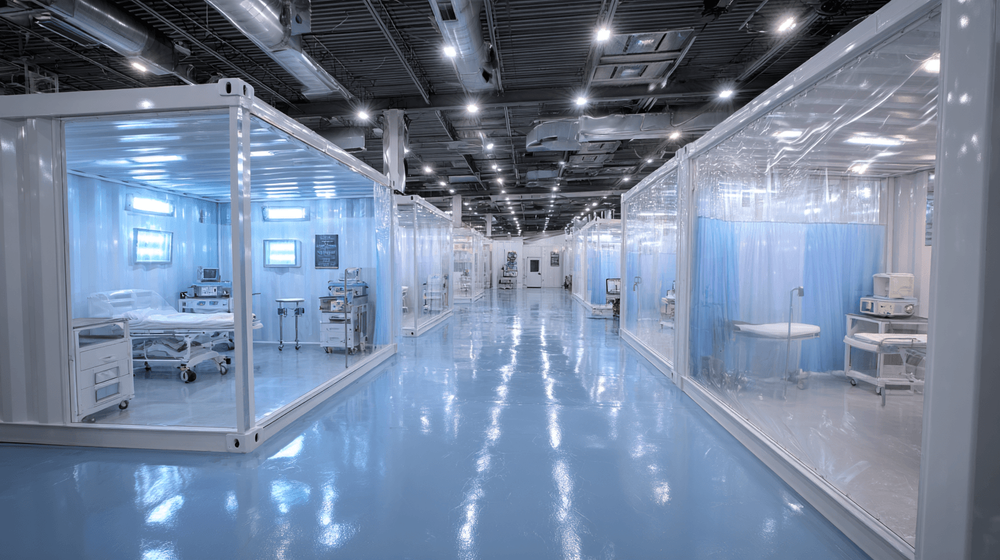
Equipment that operates in a cleanroom environment must arrive at its destination in a condition that allows it to be qualified for operation in a classified environment. Contamination introduced during transport can require extensive cleaning and re-qualification before the equipment can return to service, adding days or weeks to the project timeline and associated costs.
STSI's cleanroom equipment transport protocols begin with the correct packaging approach. Equipment surfaces that will be in contact with the cleanroom environment are protected with cleanroom-compatible packaging materials, including cleanroom-grade poly bags, lint-free protective covers, and sealed transport containers appropriate for the equipment's ISO classification level.
The transport vehicle interior is prepared to a cleanliness standard appropriate for the equipment being moved. STSI does not move cleanroom equipment in the same vehicle as general freight. Dedicated vehicles, prepared and inspected for cleanliness before loading, are used for cleanroom equipment transport.
At the destination, equipment is received in the appropriate gowning area and unpacked according to the cleanroom entry protocols of the receiving facility. STSI coordinates with the facility's cleanroom manager to confirm that the unpacking procedure aligns with site-specific entry requirements.
Analytical Instrument Relocation: Calibration, Vibration, and Documentation
Pharmaceutical quality control and research laboratories rely on analytical instruments, including HPLC systems, mass spectrometers, dissolution testers, spectrophotometers, and other precision measurement devices, that are calibrated to specific performance specifications. Many of these instruments require re-calibration after relocation, and some are sensitive enough that vibration during transport can shift their calibration significantly.
STSI's analytical instrument transport protocols use vibration-dampening packaging and pneumatic suspension vehicles to minimize the vibration environment during transport. Vibration monitoring devices are mounted on the instrument packaging to document the transport environment throughout the journey.
After delivery, the calibration documentation for each instrument is part of the project handoff package. The receiving laboratory's quality team uses this documentation as part of the post-move re-qualification process for each instrument.
Controlled Environment Room Relocation
Pharmaceutical manufacturing operations depend on controlled environment rooms: cleanrooms, cold rooms, lyophilization suites, and other specialized spaces that are built around the equipment they contain. Relocating the equipment from one of these environments requires a project approach that addresses both the individual device handling requirements and the broader environmental context.
STSI manages controlled environment room equipment relocations in coordination with the facility's quality, engineering, and validation teams. The project plan documents the qualification status of each piece of equipment, the re-qualification requirements at the destination, and the timeline for returning each piece of equipment to GMP-qualified operational status.
The Documentation Package for GMP-Regulated Moves
At the close of a GMP-regulated pharmaceutical equipment transport project, STSI delivers a documentation package that covers every element the client's quality team will need for their deviation management and equipment qualification processes:
Device inventory with regulatory classification for each item. Chain of custody records for every device from disconnection through delivery. Temperature monitoring logs for all temperature-sensitive devices and the transport environments used. Vibration monitoring data for analytical instruments and other vibration-sensitive equipment. Packaging specifications and materials documentation. Any deviation reports for conditions that fell outside specified parameters during transport. OEM or service provider sign-off for any devices that required third-party involvement in deinstallation or installation.
This package meets the documentation standards required for FDA and EU GMP compliance audits. The client's quality team does not need to reconstruct documentation from memory or from fragmented records; the complete package is assembled and organized by STSI as part of the project deliverable.
Get a quote for your pharmaceutical logistics project from STSI. https://spectransport.com/industries/medical-equipment
About the Author
Nick Herrera
Chief Marketing Officer
Specialty Transport Solutions International
Nick Herrera leads marketing strategy at STSI, where he translates complex logistics operations into actionable insights for enterprise decision-makers. With deep expertise in data center migration and specialty freight, Nick works closely with STSI's operations teams to document best practices from thousands of mission-critical moves.
Talk to an Expert
Ready to Move? Let's Talk.
Fill out the form and our team will get back to you within 24 hours.