
MRI Machine Transport: What It Takes to Move One of the Most Complex Devices in Medicine
MRI Machine Transport: What It Takes to Move One of the Most Complex Devices in Medicine
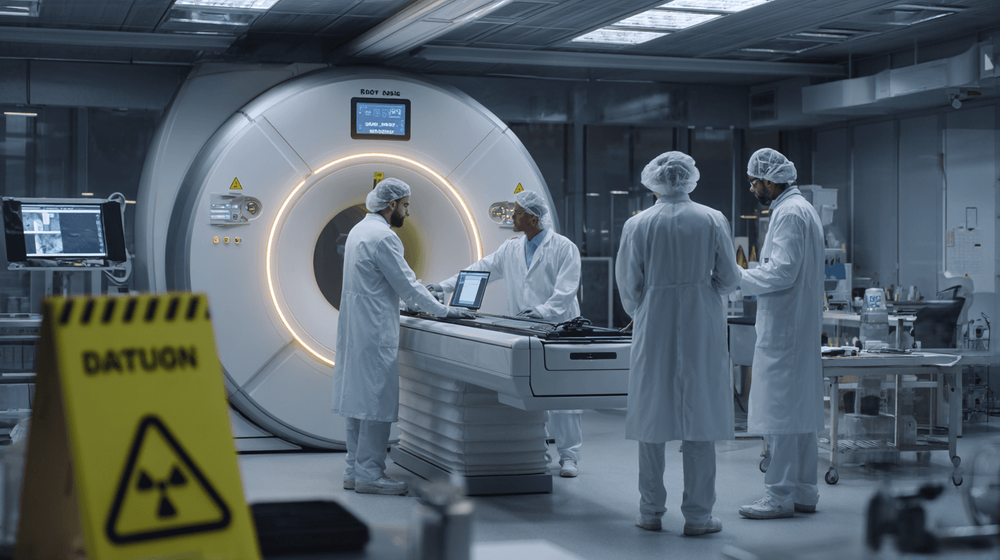
An MRI machine is not freight. It is a superconducting electromagnet operating at temperatures close to absolute zero, surrounded by sensitive electronics, weighing anywhere from 5,000 to 15,000 pounds, and containing enough stored magnetic energy to cause serious injury or equipment damage if the transport process is not planned and executed with precision. Moving one requires a team that understands the physics involved, the regulatory requirements, the OEM protocols, and the site-specific access challenges at both the origin and destination facilities.
STSI manages MRI machine transport projects from the initial site assessment through OEM recommissioning. The process covers every phase: magnet management, rigging, climate-controlled transport, and installation coordination. This article explains what that process involves and why each step matters.
Understanding What You Are Moving
Before discussing the logistics of MRI transport, it helps to understand the properties that make these systems so demanding to move.
A clinical MRI system contains a superconducting magnet: a coil of niobium-titanium wire cooled to approximately 4 degrees Kelvin (-269 degrees Celsius) using liquid helium. At that temperature, the wire loses all electrical resistance and can carry enormous currents that generate the powerful magnetic field the scanner uses to produce images. That magnetic field does not turn off when the scanner is not in use. A standard 1.5 Tesla or 3 Tesla MRI is generating its full magnetic field at all times, even when it is being transported.
That persistent magnetic field creates a hazard zone around the magnet. Ferromagnetic objects, including common tools, steel carts, and certain medical devices, can become dangerous projectiles if brought within range of the field. The transport vehicle, the rigging equipment, and every tool used during the move must be non-magnetic or maintained at a safe distance from the magnet's field.
The liquid helium that cools the magnet evaporates gradually over time. If the cryogen level drops too low, the magnet undergoes a quench: a rapid, uncontrolled transition from superconducting to resistive state that releases helium gas and can damage the magnet. Avoiding a quench during transport requires careful planning and, in some cases, a scheduled quench before the move.
The Quench Decision: Managed Release Versus Transport in Persistence
One of the first decisions in any MRI transport project is whether to quench the magnet before moving it or to transport it in a persistent (energized) state. Both approaches are viable, and the right choice depends on the specific system, the transport distance, and the logistical constraints at origin and destination.
Transporting in Persistence
Transporting a persistent MRI magnet means moving it while the full magnetic field is active. This approach preserves the magnet's helium supply and avoids the cost and complexity of re-energizing the magnet at the destination. The challenge is that every tool, vehicle, and access route must accommodate an active 1.5T or 3T magnetic field throughout the transport process.
STSI uses non-magnetic rigging hardware, non-magnetic transport dollies, and specially equipped vehicles for persistent MRI transport. The transport route is surveyed in advance to identify any potential magnetic interference sources. The cryogen level is monitored continuously throughout the move to detect any unexpected helium loss.
Scheduled Quench Before Transport
A scheduled quench releases the helium cryogen in a controlled process, de-energizing the magnet before the move. After transport and installation, the magnet must be re-energized and refilled with liquid helium, a process that takes several days and carries a significant cost. The advantage is that the de-energized magnet is easier to handle, requires no magnetic safety precautions during transport, and can be moved with conventional rigging equipment.
The OEM's field service team typically recommends and oversees the quench process. STSI coordinates with the OEM to schedule the quench at a time that minimizes the clinical impact of the magnet downtime.
Site Assessment and Access Engineering
MRI systems were installed in their original locations during facility construction or through openings that no longer exist. In many cases, the magnet is larger than the doors, elevators, and corridors that surround it.
STSI's site assessment for an MRI project covers every dimension of the access path: corridor width, door frame dimensions, floor load ratings, elevator cab dimensions and weight capacity, and any turns or grade changes along the route from the magnet room to the exterior. Where standard access is insufficient, STSI works with the facility's structural engineers and contractors to engineer solutions: removing door frames, cutting through non-load-bearing walls, using temporary ramps, or coordinating crane lifts through exterior openings.
At the destination, the same assessment applies. STSI confirms that the magnet room is complete and ready: RF shielding installed and inspected, utility connections in place, floor reinforcement complete, and the access path from the delivery point to the magnet room clear and rated for the weight.
Rigging: Air Bearings, Overhead Systems, and Non-Magnetic Hardware
Moving an MRI within a hospital environment requires specialized rigging equipment that most general rigging contractors do not operate.
Air-bearing systems use compressed air to float the magnet on a thin cushion, eliminating the friction between the magnet and the floor and allowing a small crew to maneuver thousands of pounds with precision. This is the standard approach for moving MRI systems within hospital corridors, where sharp turns and doorways make wheeled systems difficult to control.
For lifts in and out of facilities, STSI uses overhead cranes and rigging systems engineered for the specific magnet weight. All rigging hardware in contact with or near the magnet must be non-magnetic: aluminum, stainless steel, or synthetic materials that do not interact with the magnetic field.
STSI's rigging crew is trained in both the technical requirements of MRI handling and the magnetic safety protocols that protect both the crew and the facility during the move.
Climate-Controlled Transport and Cryogen Monitoring
During transport, the MRI magnet's cryogen system must be maintained within specified parameters. Temperature fluctuations and vibration can accelerate helium evaporation and in extreme cases trigger an unintended quench.
STSI's MRI transport vehicles are climate-controlled and equipped with pneumatic suspension systems that isolate the magnet from road vibration. Continuous temperature and vibration monitoring during transit provides a documented record of the transport environment. Cryogen levels are checked before departure and upon arrival.
For long-distance transports, STSI plans routing to minimize road time and coordinates with the OEM on acceptable cryogen consumption rates for the specific system and transport distance.
Coordination With the OEM
Every MRI transport project involves coordination with the OEM's field service team. The OEM is responsible for the quench or persistency management decision, the helium fill at the destination, magnet re-energization, and clinical commissioning before the system returns to patient use.
STSI works with the OEM from the planning phase through handoff, ensuring that the logistics timeline aligns with the OEM's availability and that the installation environment at the destination is ready for their work to begin immediately upon arrival. Delays in OEM commissioning are expensive: a hospital radiology department waiting for an MRI to be commissioned loses scheduling capacity every day.
Reinstallation and Commissioning Support
After the magnet is positioned in the magnet room, the OEM's team handles the technical commissioning: helium fill (if the magnet was quenched), re-energization, shimming, gradient system calibration, and image quality verification. STSI's team remains available during this phase to address any positioning adjustments or access issues that arise.
The project does not close until the system is commissioned, the OEM has signed off on clinical readiness, and STSI has delivered the complete transport documentation package: site assessment records, chain of custody documentation, cryogen monitoring logs, vibration monitoring data, and any incident reports.
What MRI Transport Costs and What Drives the Price
The cost to move an MRI machine varies based on several factors: the field strength and model of the system, whether a quench is required, the transport distance, the access complexity at origin and destination, and the amount of site preparation work required.
MRI transport projects typically range from tens of thousands to six figures depending on complexity. A local move of a 1.5T system between facilities in the same metro area, with straightforward access at both locations and a persistent transport, costs significantly less than a cross-country relocation of a 3T system requiring vault access engineering, a scheduled quench, and a full helium refill at the destination.
STSI provides detailed project assessments that break down the cost of each phase, so the client understands exactly what they are paying for and why. The unlimited insurance coverage included in every STSI project protects the full value of the system throughout the move.
Why Experience Matters
There is no substitute for having done this before. STSI has managed hundreds of imaging equipment relocations, including MRI systems across a range of field strengths, manufacturers, and installation environments. The team knows what access challenges are common in older hospital buildings, how OEMs differ in their commissioning requirements, and how to solve the problems that arise on move day, because they have seen most of them before.
The 100% Guarantee and 24/7/365 availability mean that if something unexpected happens during an MRI transport, STSI has the resources and the team to address it immediately. Clients do not manage the problem alone.
Get a quote for your MRI machine transport project from STSI. https://spectransport.com/industries/medical-equipment
About the Author
Nicole Mac
Director of Marketing
Specialty Transport Solutions International
Nicole Mac oversees STSI's content and communications strategy, drawing on her background in B2B logistics marketing to create resources that help IT directors, facilities managers, and procurement teams navigate complex relocation projects.
Talk to an Expert
Ready to Move? Let's Talk.
Fill out the form and our team will get back to you within 24 hours.