
Medical Equipment Installation Services: From Delivery to Full Operational Readiness
Medical Equipment Installation Services: From Delivery to Full Operational Readiness
Delivery is not the finish line. A medical device sitting in a hospital room, unpowered and unconnected, is not serving patients. The gap between a delivered device and an operational device, whether it is a patient monitoring system, an MRI scanner, a robotic surgical system, or a laboratory analyzer, determines how quickly the clinical team can return to full capacity after a relocation. Medical equipment installation services bridge that gap with the technical coordination, OEM engagement, and commissioning expertise that delivery alone cannot provide.
STSI's conception-to-completion model means the team stays engaged through installation and commissioning on every project. The logistics work is not complete until the equipment is certified as clinically ready by the appropriate technical authority. This guide explains what medical equipment installation services cover, how they coordinate with OEM and biomedical engineering teams, and why the installation phase deserves as much planning attention as the transport phase.
What Medical Equipment Installation Services Actually Cover
The term "installation services" means different things depending on who uses it. Some logistics providers consider a device installed when it is placed in a room. STSI's definition of installation encompasses everything from initial placement through clinical commissioning sign-off.
Placement and positioning involves setting the device in its designated location within the specified tolerances for the installation. For large imaging systems, this requires rigging precision to align the device with structural anchors, utility connections, and the spatial relationships with other equipment in the room. For smaller devices, it means confirmed placement at the correct height, orientation, and position per the clinical team's specifications.
Physical connection involves power, data, gas, and any other utility connections required for the device to function. STSI coordinates connection work with the facility's biomedical engineering team and, where required, with the OEM's field service technicians to ensure that connections are made in the correct sequence and to the correct specifications.
OEM commissioning coordination involves scheduling and supporting the OEM's technical work. Many medical devices cannot be cleared for clinical use without the OEM's sign-off. MRI systems require the OEM to oversee helium fills and beam shimming. Linear accelerators require OEM medical physicists to calibrate the beam delivery system. Robotic surgical systems require OEM technicians to perform system alignment and calibration. STSI builds OEM commissioning into the installation timeline from the beginning of the project.
Biomedical engineering coordination involves working with the facility's in-house biomedical engineering team throughout the installation process. Biomedical engineers are responsible for device safety checks, electrical testing, and the formal acceptance of the device into the facility's equipment management system. STSI ensures that biomedical engineering has the access, information, and timing they need to complete their work efficiently.
The OEM Relationship: Why It Matters for Installation Success
The OEM's field service team is not an optional element of medical equipment installation for complex devices. Their involvement is often a warranty requirement, and for certain device categories, their commissioning sign-off is a regulatory prerequisite for clinical use.
STSI establishes contact with the relevant OEM's field service scheduling team during the project planning phase, not after the equipment arrives. OEM field service availability is not always flexible: scheduling a team of medical physicists or field service engineers on short notice, particularly for complex systems like linear accelerators or high-field MRI systems, can add weeks to the installation timeline. Building OEM scheduling into the project plan from the start is how installation timelines stay on track.
On the day of delivery, STSI's team coordinates with the OEM's technicians to ensure that the installation environment is ready for their work when they arrive: the device is positioned correctly, the utility connections are in place, and the room is clear for their technical work. No time is wasted waiting for the logistics team to complete tasks that should have been finished before the OEM team arrived.
Calibration Verification: Confirming Performance After the Move
The physical act of installation does not confirm that a medical device will perform to specification in its new location. Calibration verification after installation confirms that the device's performance meets the standards required for its clinical use, that any calibration drift introduced by transport has been identified and corrected, and that the device is ready to produce results that can support clinical decisions.
For imaging systems, calibration verification involves image quality testing using standardized test phantoms. The resulting images are compared against acceptance standards to confirm that the scanner is producing images of the required diagnostic quality.
For analytical instruments in laboratory settings, calibration verification involves running reference standards and comparing the results against the instrument's documented performance specifications.
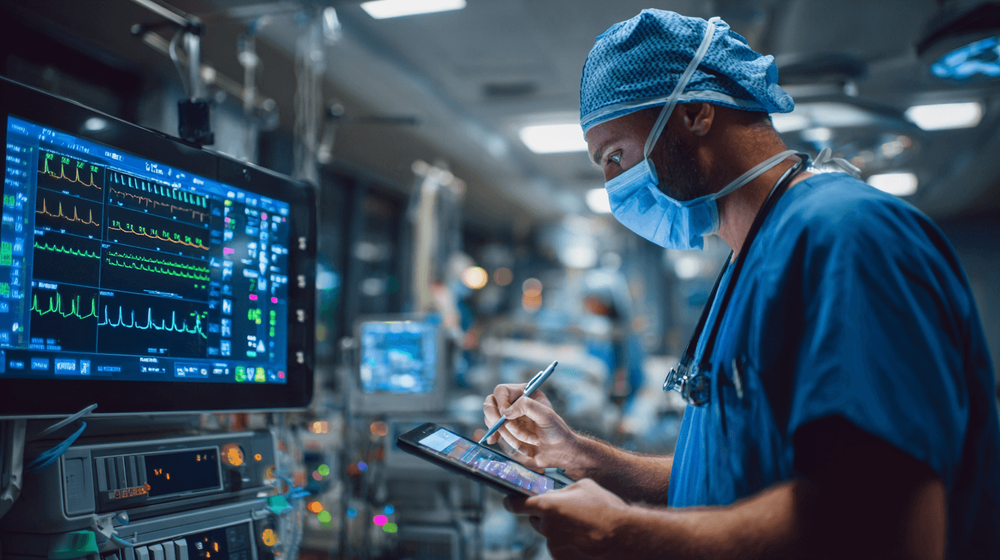
For patient monitoring systems, calibration verification includes checking the accuracy of each parameter the device measures: temperature, blood pressure, oxygen saturation, electrocardiography, and any other physiological variables the monitor is configured to measure.
STSI provides the pre-move calibration documentation that serves as the baseline for post-move verification. The post-move verification results are included in the project documentation package.
Last Mile Delivery for Medical Equipment: The Final Leg Is the Hardest
Last mile delivery in the medical equipment context is not a figure of speech. It is the literal last segment of the transport journey: from the delivery vehicle at the loading dock to the device's operational position in the clinical space. In a hospital, that last mile can involve navigating through public corridors, through secured clinical areas, in elevators rated for the device weight, and into rooms that were designed for the equipment but may not have been designed for the equipment to arrive through standard corridors.
STSI's last mile delivery capability for medical equipment uses the same rigging systems, air-bearing skate equipment, and precision dollies that are used for the full transport project. The team does not hand off the device to a building facilities team at the loading dock; they take it all the way to its operational position. This continuity of handling from the transport vehicle through final placement eliminates the risk of damage or handling errors that occurs when multiple teams with different equipment and protocols touch the same device.
Compliance Documentation for Installation
The installation phase generates compliance documentation that is separate from but connected to the transport documentation. STSI's installation documentation covers the placement confirmation (confirming that the device is in the correct location), the connection configuration documentation, the OEM commissioning report, the biomedical engineering acceptance record, and the calibration verification results.
This documentation completes the chain of compliance records that runs from the pre-move assessment through the installation sign-off. For regulated devices, this complete record demonstrates that the device has been handled, transported, and installed in accordance with applicable regulatory requirements throughout the project.
Medical Equipment Installation for Specific Device Categories
Different device categories have specific installation considerations that shape the installation service approach.
Patient monitoring systems require network integration in addition to physical placement. The device must be connected to the clinical network, enrolled in the patient data system, and confirmed to be communicating correctly with the central monitoring station. STSI coordinates with the facility's IT team to complete network integration as part of the installation process.
Infusion pumps and medication management systems require drug library configuration or migration in addition to physical installation. The drug library that governs dosing limits must be current and correctly configured at the new location. STSI coordinates with the pharmacy team to confirm that drug library configuration is complete before the first clinical use.
Surgical robots require a multi-day installation process coordinated with the OEM's installation team. The installation involves mechanical assembly of the robotic arms, electrical and data connection, alignment calibration, and a formal acceptance testing process that confirms the system's performance before clinical use. STSI manages the logistics environment around the OEM's installation work, ensuring that the team has the space, access, and support they need to complete the process on schedule.
Get a quote for your medical equipment installation project from STSI. https://spectransport.com/industries/medical-equipment
About the Author
Nicole Mac
Director of Marketing
Specialty Transport Solutions International
Nicole Mac oversees STSI's content and communications strategy, drawing on her background in B2B logistics marketing to create resources that help IT directors, facilities managers, and procurement teams navigate complex relocation projects.
Talk to an Expert
Ready to Move? Let's Talk.
Fill out the form and our team will get back to you within 24 hours.