
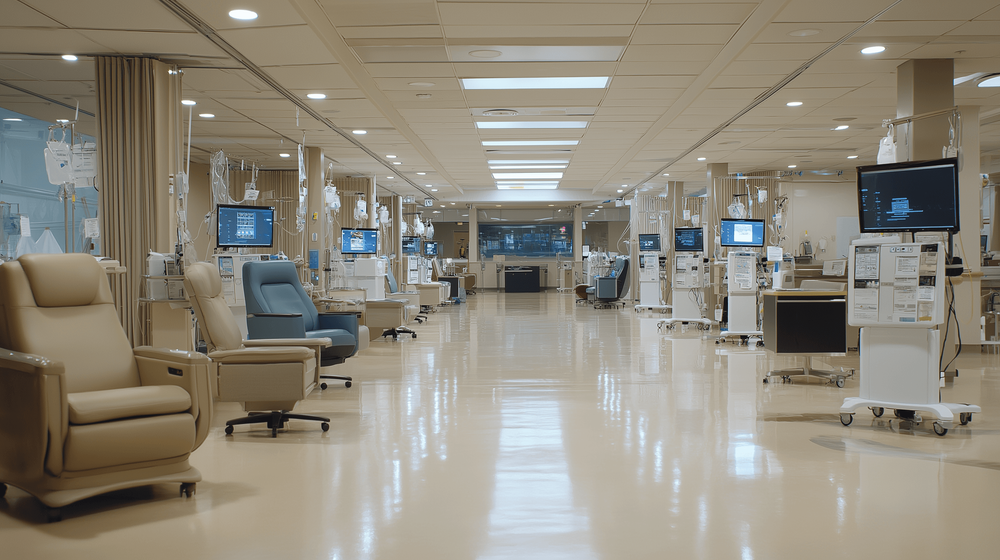
Dialysis Machine Moving: Relocating Life-Sustaining Equipment with Clinical Continuity
Dialysis machines are life-sustaining equipment. Patients who depend on hemodialysis receive treatment three times per week, and missing treatments creates immediate health consequences including dangerous electrolyte imbalances and fluid overload. When a dialysis center or hospital renal unit relocates its machines, the logistics plan must account for patient treatment schedules as the primary constraint, not as an afterthought to the equipment moving plan.
STSI relocates dialysis equipment with protocols that prioritize treatment continuity and coordinate the unique infrastructure requirements of hemodialysis systems. This guide covers the planning, water system coordination, infection control protocols, and phased move strategies that protect patient care during dialysis equipment relocation.
Why Dialysis Equipment Moves Are Clinically Complex
Treatment Schedule Constraints
A typical dialysis center operates on a three-shift, six-day schedule, with each patient assigned to specific days and times. Relocating equipment must be planned around these treatment schedules, ensuring that enough machines remain operational at either the origin or destination location to maintain every patient's treatment schedule without interruption.
This typically means a phased move where machines are relocated in batches, with each batch moving after the last treatment session on one day and being operational at the destination before the first treatment session on the next scheduled treatment day. The logistics window for each batch may be as short as 12 to 16 hours.
Water Treatment System Coordination
Hemodialysis machines require treated water that meets AAMI (Association for the Advancement of Medical Instrumentation) standards for purity. The water treatment system at the origin facility, which typically includes reverse osmosis, deionization, and distribution loop components, must either be relocated as part of the project or replicated at the destination.
The destination water treatment system must be installed, tested, and producing water that meets AAMI standards before any dialysis machine is connected. Water quality testing, including bacterial culture and endotoxin testing, requires time for results. This water system readiness timeline often drives the overall project schedule.
Infection Control
Dialysis machines come into contact with patient blood products during every treatment session. Infection control protocols for dialysis equipment transport require thorough disinfection of all patient-contact surfaces before the equipment leaves the origin facility. Bleach disinfection or heat disinfection cycles must be completed and documented before machines are disconnected for transport.
At the destination, machines must pass another disinfection cycle and a water pathway integrity test before returning to patient use. These infection control steps are not optional and cannot be compressed.
Move Planning
Patient Communication
Patients who depend on dialysis treatments must be informed well in advance of any schedule changes resulting from the relocation. STSI coordinates with the clinical team to develop a patient communication plan that specifies any temporary schedule modifications, provides directions to the new facility location, and identifies the point of contact for patient questions during the transition.
Phased Move Strategy
STSI designs phased move strategies that maintain treatment capacity throughout the relocation. A typical approach moves one-third of the machines at a time, maintaining two-thirds capacity at the origin while establishing one-third capacity at the destination. As each batch is verified operational at the destination, the next batch moves.
The phase plan accounts for the water system startup timeline at the destination, the disinfection cycle requirements at both ends, and the electrical and plumbing infrastructure readiness at the destination.
Transport and Reinstallation
Equipment Handling
Dialysis machines are not as heavy as imaging equipment, but they contain sensitive flow sensors, pressure transducers, and electronic control systems that require careful handling. STSI transports dialysis machines in padded, climate-controlled vehicles with each machine individually secured and protected.
Utility Connection at Destination
Each dialysis station requires treated water supply, drain connections, and electrical power. STSI coordinates with the facility's plumbing contractor and electrician to confirm that all station connections are ready before machines arrive. Connection verification includes water flow testing, drain function testing, and electrical circuit verification at each station.
Post-Move Testing
After connection at the destination, each machine undergoes a full self-test sequence, a disinfection cycle, and a water pathway test before returning to patient use. STSI coordinates the testing timeline with the clinical team to ensure that machines are available for the next scheduled treatment session.
Why STSI for Dialysis Equipment Relocation
STSI's 24/7 availability enables overnight and weekend moves that align with the narrow logistics windows between treatment sessions. The conception-to-completion approach means STSI coordinates water system readiness, infection control compliance, and clinical scheduling alongside the physical equipment move. The 100% Guarantee means every machine arrives operational and ready for patient care.
Get a quote for your dialysis equipment relocation from STSI. https://spectransport.com/industries/medical-equipment
Related Services
Contact STSI
- Location: Berlin, CT - 24/7/365
- Email: STSI@Spectransport.com
- Phone: (860) 828-3286
About the Author
Nick Herrera
Chief Marketing Officer
Specialty Transport Solutions International
Nick Herrera leads marketing strategy at STSI, where he translates complex logistics operations into actionable insights for enterprise decision-makers. With deep expertise in data center migration and specialty freight, Nick works closely with STSI's operations teams to document best practices from thousands of mission-critical moves.
Talk to an Expert
Ready to Move? Let's Talk.
Fill out the form and our team will get back to you within 24 hours.