
Data Center Cable Management During Relocation: Preserving the Infrastructure You Cannot See
Data Center Cable Management During Relocation: Preserving the Infrastructure You Cannot See
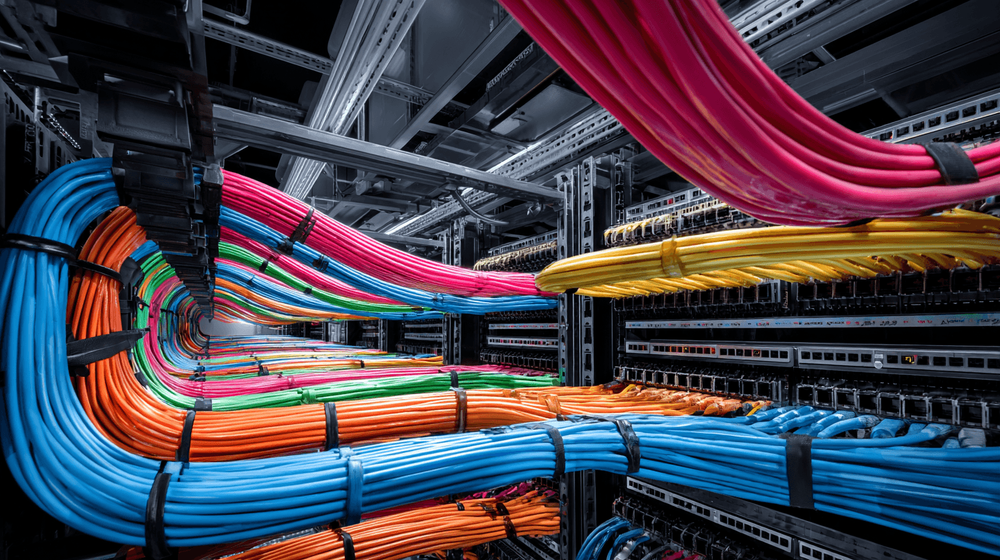
Cabling Is the Nervous System of Your Data Center
A typical 42U server rack contains 50 to 200 individual cable connections: power cables, copper network cables, fiber optic patch cables, serial management cables, and potentially KVM or out-of-band management connections. Across a 50-rack data center, that translates to 2,500 to 10,000 individual cable paths, each connecting a specific port on a specific device to another specific port on another specific device.
Every one of those connections must be recreated accurately at the destination for the environment to function. A single fiber patch cable connected to the wrong port on a fiber channel switch can disrupt an entire storage fabric. A network cable plugged into the wrong VLAN port can create a security exposure or a connectivity failure. A power cable connected to the wrong PDU circuit can create an imbalanced load that trips a breaker.
Cable management during a data center relocation is the discipline that prevents these failures. STSI's cable documentation, labeling, and rebuild protocols are the foundation for post-move reliability.
Pre-Move Cable Documentation
STSI's cable documentation process captures every connection in the environment before disconnection begins. Each cable is traced from its origin port to its destination port, and both endpoints are recorded with device name, port number, and port type. The physical routing path (through cable management arms, vertical cable managers, overhead trays, or under-floor pathways) is documented and photographed.
For fiber optic connections, the documentation includes fiber type (single-mode, multi-mode), connector type (LC, SC, MPO), and patch panel position for structured cabling environments. Fiber connections are particularly critical because a fiber cable reconnected to the wrong patch panel port can route traffic to the wrong network segment, and the error may not be immediately apparent in basic connectivity testing.
The documentation output is a complete cable matrix that maps every connection in the environment, providing the reinstallation team with an exact blueprint for rebuilding the cable plant at the destination.
Cable Labeling Protocols
STSI labels every cable at both ends before disconnection. Labels include the source device and port identifier, the destination device and port identifier, and a unique cable sequence number that matches the cable matrix documentation. Labels are applied using durable, machine-printed labels that remain legible throughout handling, packing, and transport.
Color coding is applied when the client has an established color convention or when the relocation is an opportunity to implement one. Common conventions assign different colors to different cable types (copper network, fiber, power, management) or different network zones (production, management, storage, backup). Consistent color coding accelerates both reinstallation and ongoing maintenance.
Cable Handling During the Move
Cables that will be reused at the destination are coiled, bundled, and packed in labeled bags that correspond to the rack and device they serve. Fiber optic cables receive additional protection in rigid containers that maintain minimum bend radius during transport. Copper patch cables are inspected for damage (kinked conductors, damaged connectors) during removal, and damaged cables are flagged for replacement rather than reinstallation.
For organizations that are replacing cable infrastructure during the relocation (a common practice when moving to a facility with different cabling standards or when the existing cables are at the end of their service life), STSI coordinates new cable procurement and pre-staging at the destination so that installation can proceed without waiting for materials.
Cable Rebuild at the Destination
STSI's installation team rebuilds the cable plant at the destination following the documented cable matrix. Each cable is routed through the specified path, connected to the documented ports at both ends, and verified against the cable matrix. Cable management standards (proper bend radius, appropriate service loops, neat bundling, consistent routing) are applied throughout the installation.
The rebuilt cable plant is photographed and the as-built documentation is delivered to the client. Any deviations from the source configuration (intentional improvements or necessary changes due to destination infrastructure differences) are documented in the as-built package.
STSI's cable management discipline across 500+ data center relocations ensures that the infrastructure connecting your systems is rebuilt with the same precision as the systems themselves. The cable plant may be invisible during normal operations, but its accuracy determines whether those operations run without interruption after the move.
| Discuss cable management planning for your relocation with STSI. https://spectransport.com/industries/data-center-migration |
|---|
About the Author
Nick Herrera
Chief Marketing Officer
Specialty Transport Solutions International
Nick Herrera leads marketing strategy at STSI, where he translates complex logistics operations into actionable insights for enterprise decision-makers. With deep expertise in data center migration and specialty freight, Nick works closely with STSI's operations teams to document best practices from thousands of mission-critical moves.
Talk to an Expert
Ready to Move? Let's Talk.
Fill out the form and our team will get back to you within 24 hours.